


Hi Everyone,
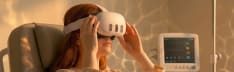
Welcome back to Lemons in the Room, the VR digital-therapy startup reshaping the quality of care in hospitals.
We want to share what’s happening in immersive health and inside our lab of Lemons 🍋.
Lemons Journal is where we explore how virtual reality, product design, and neuroscience are redefining healthcare.
In this edition:
Europe Is Watching: UnitedXR, EIT Health & the Rise of Clinical XR
Inside Lemons: New Hospitals, New Minds, New Momentum
Product Update: The Road to Lemo 1.0
Opening Snapshot — Back to Where It All Started
We want to start this update with an important moment for us.
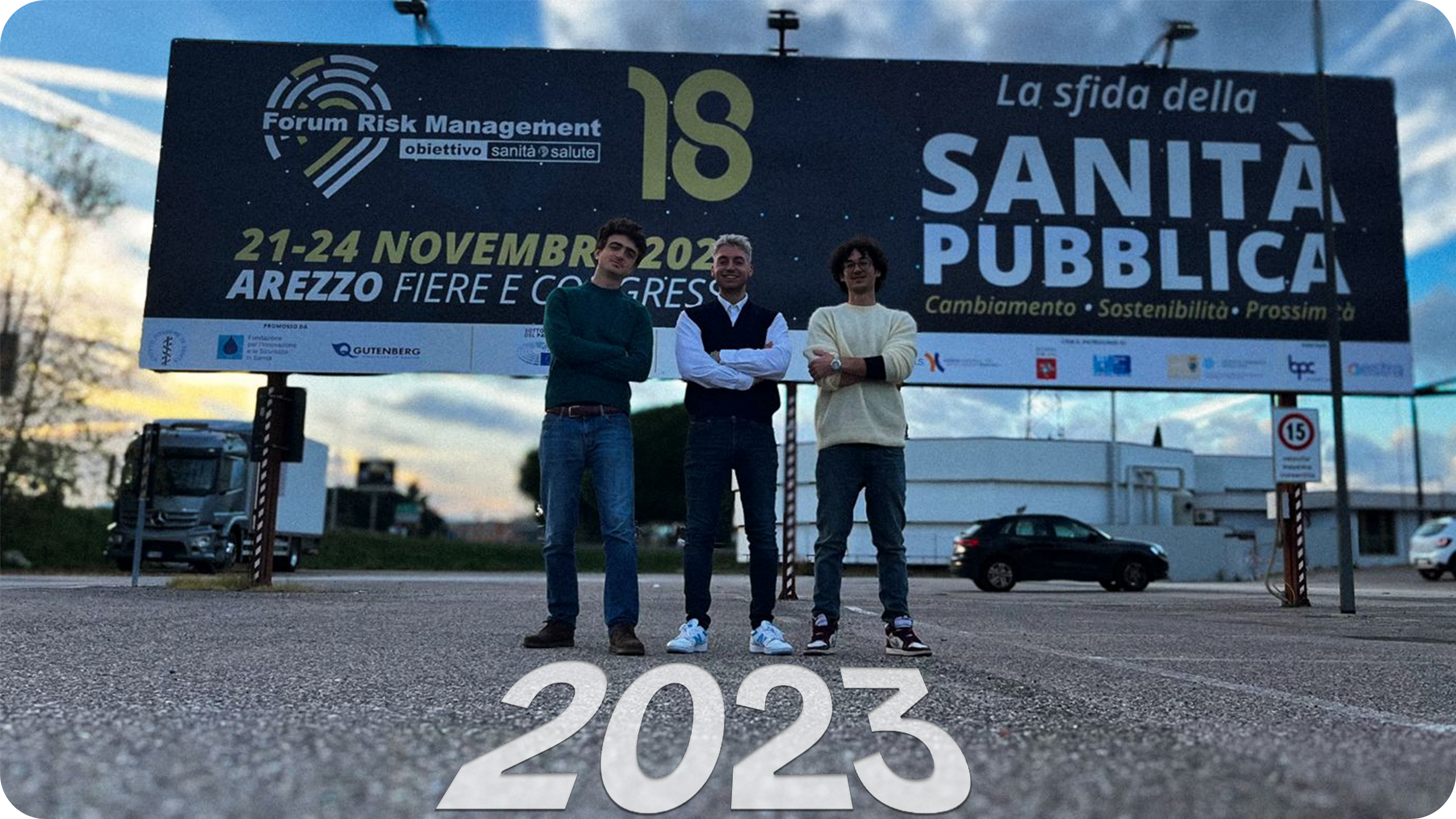
Two years ago, three students with nothing but an idea and a lot of stubborn motivation managed to squeeze their way into Forum Risk Management, the biggest healthcare event in Italy.
We had no booth. No team. No real structure.
Just one headset, a prototype, and a lot of energy.
And yet, somehow, we captured the attention of the entire fair.
We were even offered a spot on stage for a completely disruptive talk, totally out of sync with the usual tone of the event.
That was the moment Lemons quietly began.
This month, we went back.
But not as students sneaking in. From the main door!
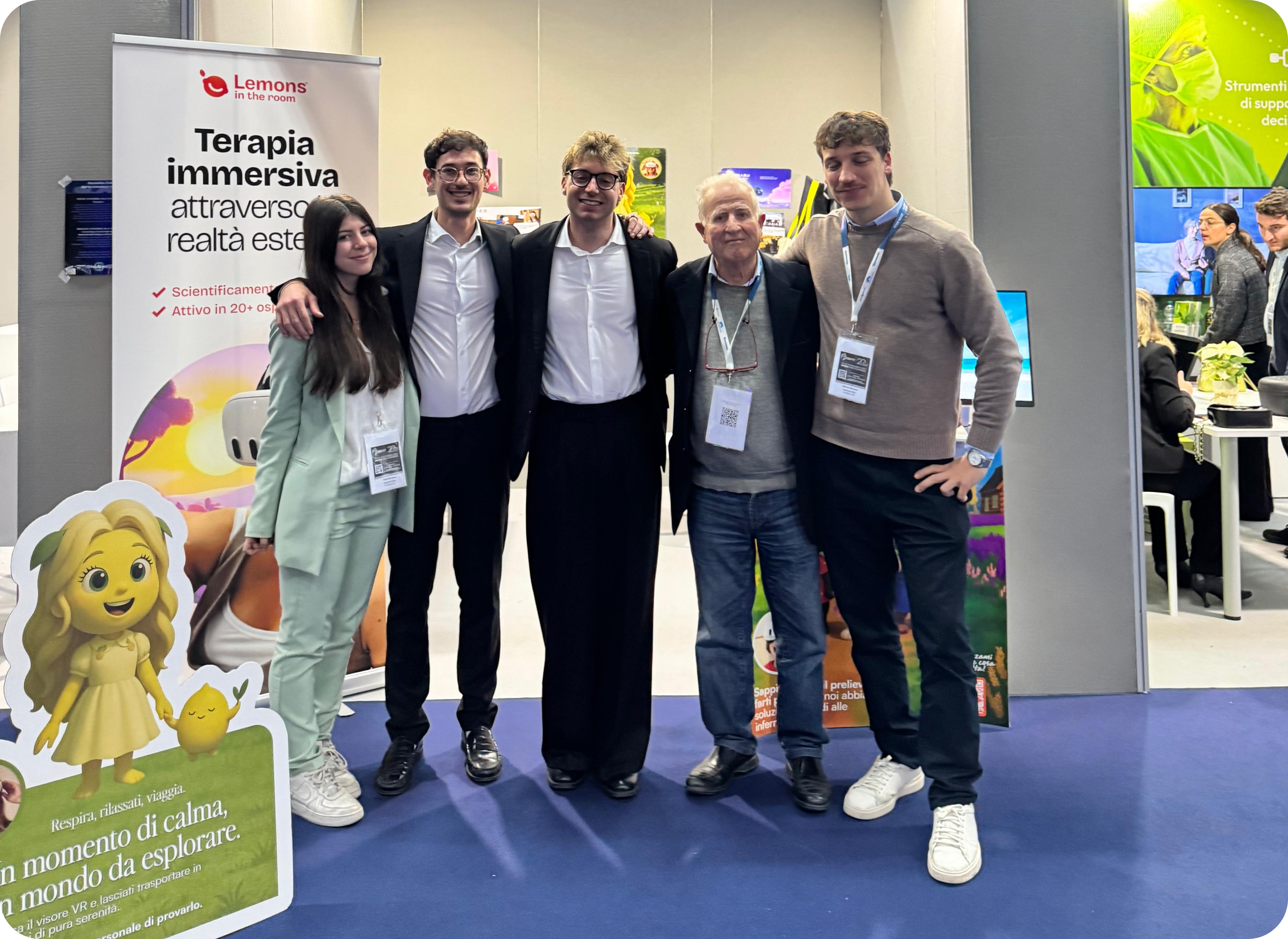
We returned with our own stand, a fully formed product, and hundreds of conversations with clinicians, nurses, and hospital directors.
We returned as the team we once imagined we could be.
A lot has changed in two years.
But the feeling, that spark, is exactly the same.
1. Europe Is Watching — UnitedXR, EIT Health & the Rise of Clinical XR
Not just Italy anymore.
This month we stepped onto the European stage, and it’s clear that immersive healthcare is no longer a niche experiment. It’s becoming a real movement.
UnitedXR — A New Spotlight for Clinical XR
We been selected among the Startup to Watch to pitch at UnitedXR, the largest XR fair in Europe.
A stage normally dominated by hardware giants, chip manufacturers, and deep-tech labs.
Being invited there means one thing:
Clinical XR is now recognised as an emerging category, and Lemons is one of the companies to watch.
All the big players were there.
Meta, Pico, Varjo, Qualcomm, and the major ecosystem builders.
And for the first time, a VR therapeutic solution designed for hospitals stood next to them.
Beyond the pitch itself, UnitedXR gave us something more valuable: a clear snapshot of where the XR industry actually stands today.
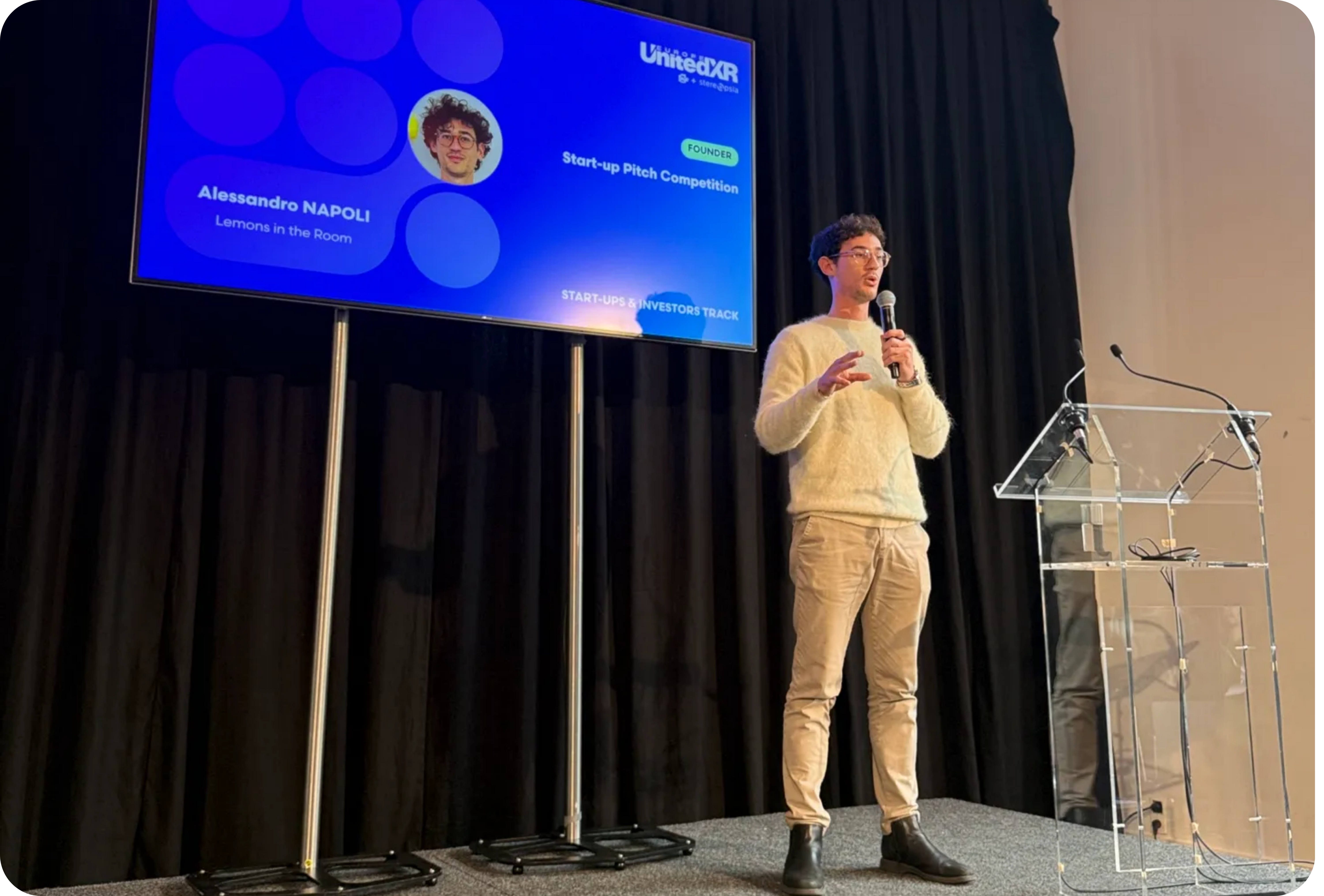
We had the chance to try competing products, speak directly with other teams, and listen to the problems and limitations that many players are facing.
Many solutions still struggle with usability in real environments, others are disconnected from clinical workflows.
Some are built for demos rather than for daily use.
Spending time on the floor, testing devices, and comparing approaches confirmed something important for us:
Lemons is operating at the highest level of the current industry.
Not because of features, but because of focus.
Because the product is designed for hospitals, not adapted to them.
Because it works within constraints instead of ignoring them.
EIT Health — Europe Opening Its Doors
We also reached the final round of EIT Health, one of the most important European networks in healthcare innovation.
A program that brings together hospitals, universities, corporates, regulators, and investors from all over Europe.
And the message was clear:
Our solution has European relevance.
Not just local traction, but the potential to become part of a continental strategy for patient-centered care.
From Arezzo to EIT Health to the main stage of UnitedXR, this month made one thing clear: Europe is starting to see immersive healthcare not as an experiment, but as an emerging standard.
2. Inside Lemons — New Hospitals, New Minds, New Momentum
Lemons is growing inside hospitals, inside teams, and inside the healthcare system itself.
New Hospitals, New Clinical Use Cases
This month we signed new contracts and activated new departments across Italy.
Each week Lemo enters a different ward, meets new clinicians, and interacts with patients in real conditions.
One moment stood out.
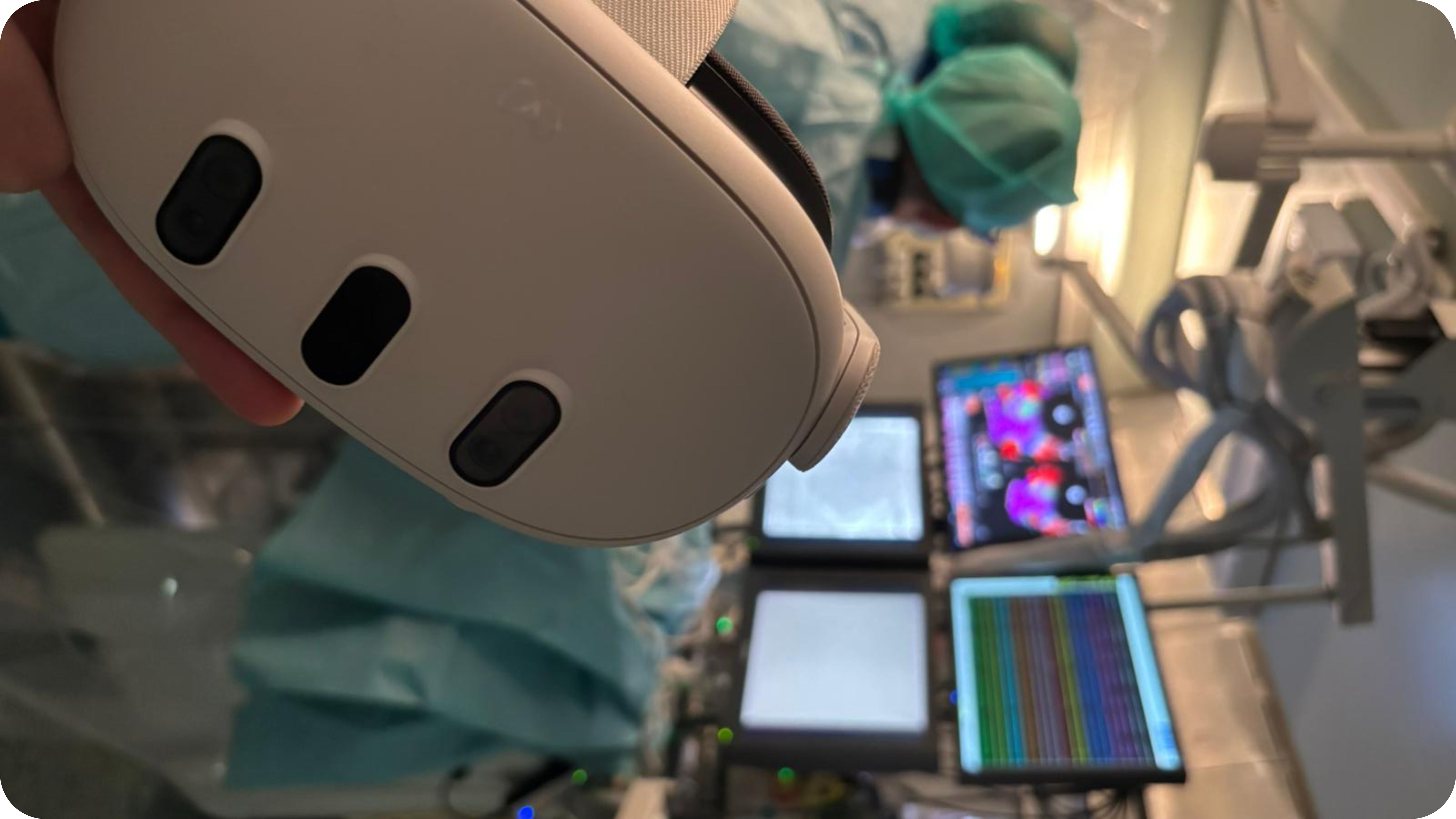
Lemo was used during a cardiac ablation procedure, replacing pharmacological sedation and helping the patient remain calm and stable throughout the intervention.
A concrete step toward what we call digital sedation.
Consip: Officially in the National Procurement System
Another important milestone:
Lemons is now officially listed on Consip, the national procurement platform used by all public hospitals in Italy.
This simplifies purchases, removes friction, and makes our solution easier to integrate into clinical workflows.
Being on MEPA means we are a recognized supplier. It is a big validation for a startup in medical innovation.
A New Tool for Integration: The UV Sterilization Base
To support adoption inside wards, we are exploring a UV based sterilization module for our headsets.
Hospitals keep asking for simple, fast, hygienic tools.
Our charging base already solves part of the workflow; adding a compact UV module could remove one of the last practical frictions: sanitizing headsets between patients.
Adding a small and easy module will simplify and enhance the offer and the sanitizing headsets between patients.
3. Product Update — The Road to Lemo 1.0
The product continued to evolve this month, both in stability and in structure.
Our focus has been on refining the foundations that will define Lemo 1.0.
Voice Interaction
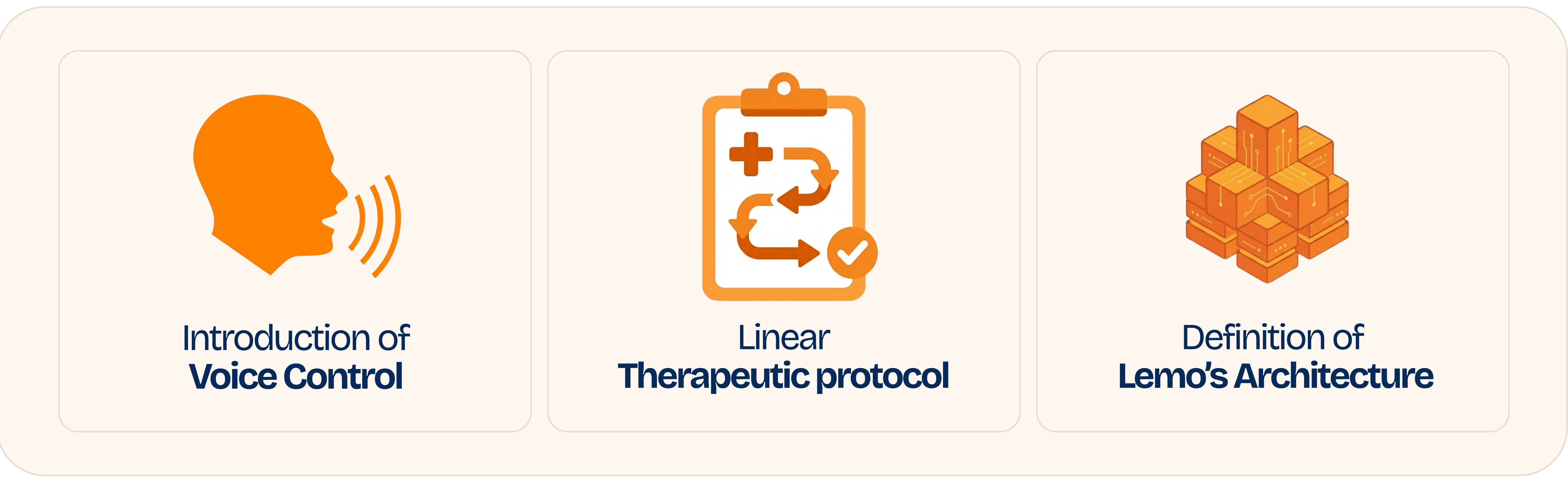
We introduced voice control inside Lemo.
This simplifies the experience for patients and improves usability for clinicians, who can now operate the system without touching the headset or navigating menus.
Building a Linear Protocol
Over the last months we started to structure Lemo not just as a VR experience, but as a linear therapeutic protocol, usable and repeatable across different hospitals.
This includes:
a clear sequence of steps
consistent clinical objectives
measurable outputs
standardization across hospitals
The aim is simple: create something that can be adopted and applied in the same way anywhere, regardless of the clinician or the ward.
Designing the 1.0 Foundation
Much of the product work now is less about adding features and more about defining the architecture that will support Lemo for the next years.
With Lazar we are aligning on:
the next iteration of the experience
clinical requirements
data structure and outcomes
operational workflow for hospitals
integration with our roadmap for international expansion
This phase is essential to move toward a stable and scalable 1.0 release.
Wrapping Up 2025
To wrap up 2025, it’s worth taking a moment to look at what actually happened.
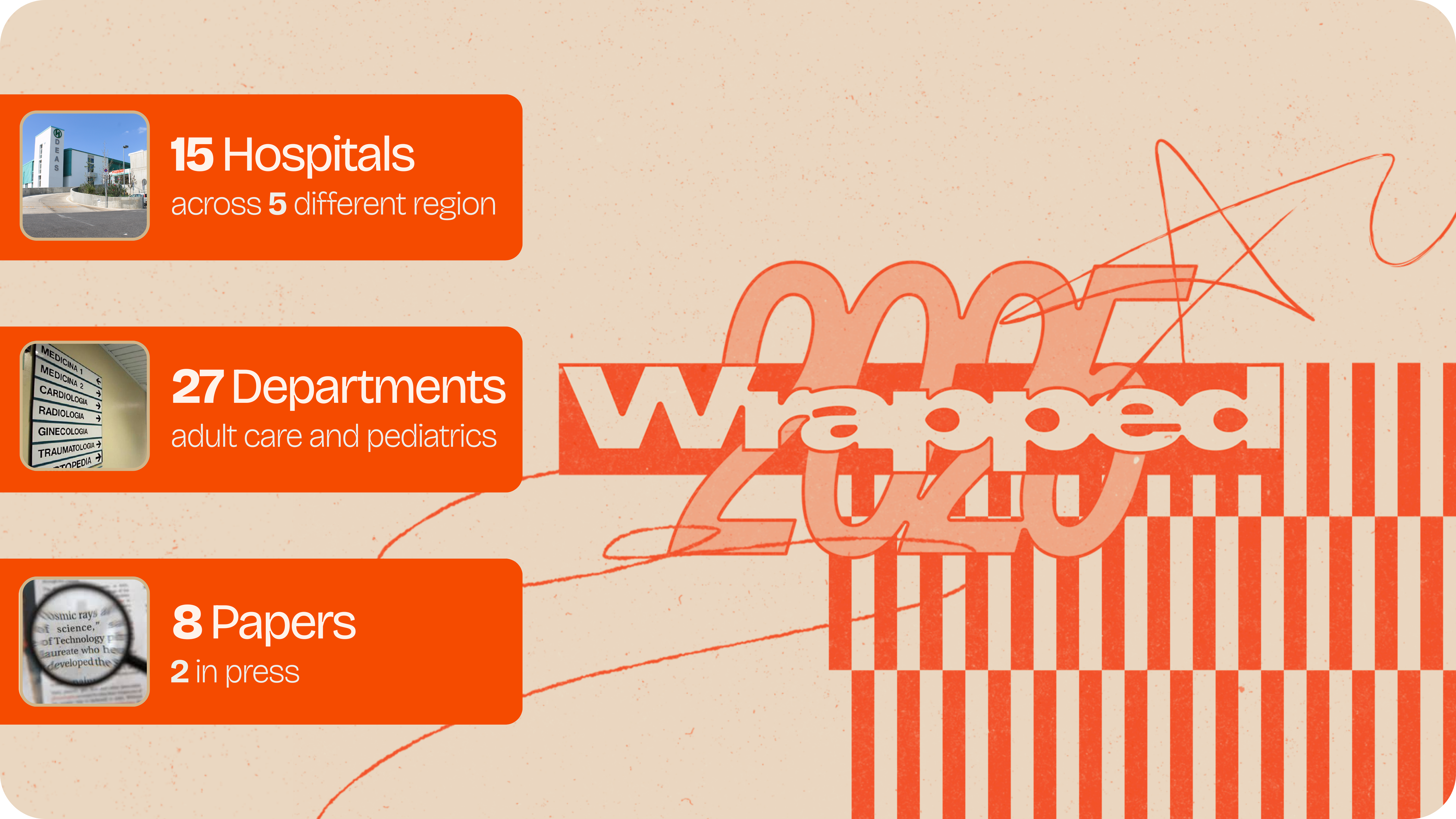
Lemons is now active in 15 hospitals, across 5 different regions.
A total of 27 departments, split between adult care and pediatrics.
During the year, 8 scientific papers have been developed, with 2 currently being published, also in collaboration with AIOM, covering areas from oncology to senology.
Clinical results show meaningful impact on anxiety, distress, and pain.
New hospitals are joining the network in Rieti, Grosseto, and Perugia.
Our work has been supported by organizations such as Fondazione Lavazza, Lions Club, and Fratellanza Militare.
And there is more coming.
See you in 2026! Stay Lemons 🍋
We are closing it with clarity on where we stand, and where we are heading next.
Team Lemons 🍋